
Use Q1, Q2, Q3, Q4 and the R value to understand what a water meter can bill at low flow, not just what the datasheet headline says.
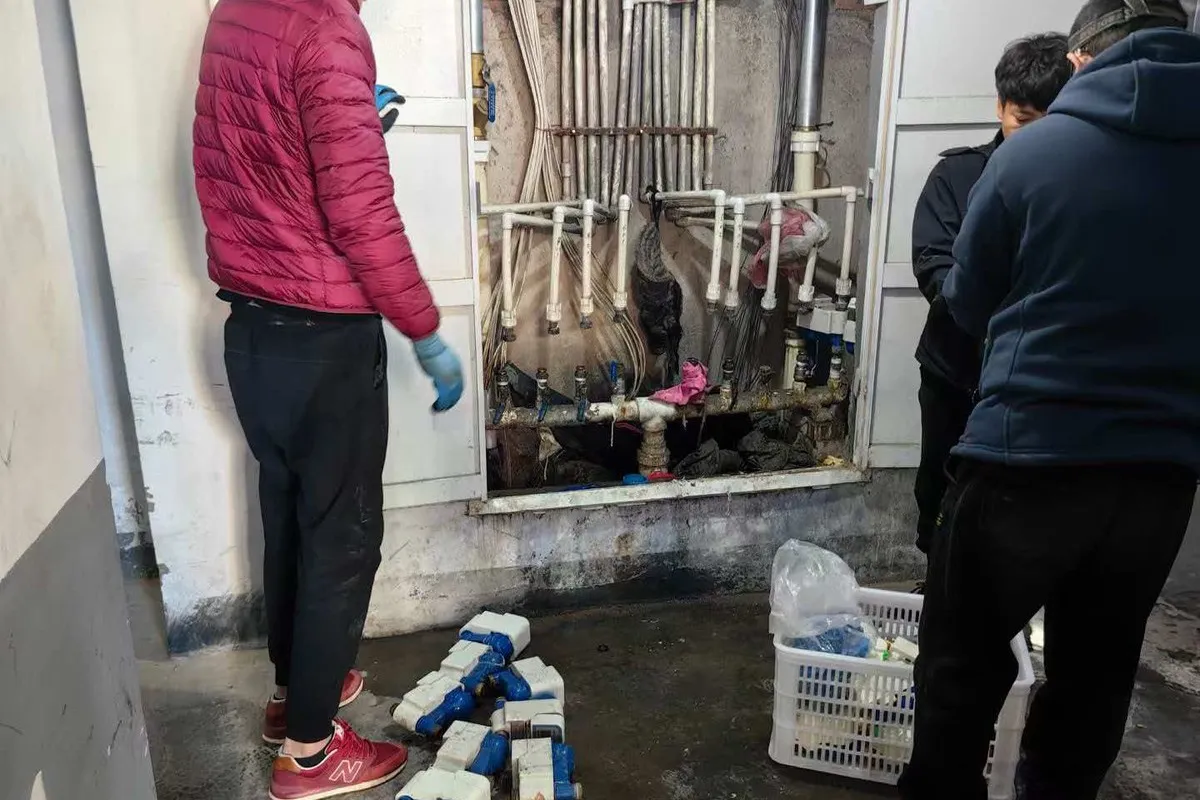
Quick answer
- Accuracy class and turndown ratio explain most of the price gap between two meters of the same size, and neither means what buyers usually assume it does.
- The accuracy class describes the error band between Q2 and Q4 only. Below Q2 it widens to ±5% on a class 2 meter; below Q1 the meter is no longer really measuring.
- R = Q3 ÷ Q1. A wider range lowers the smallest flow you can still bill. On a DN15 meter at Q3 2.5 m³/h, R160 gives Q1 of 15.6 L/h while R800 gives 3.1 L/h.
- US EPA figures put average household leakage at about 9,400 gallons a year — roughly 4 litres per hour averaged out, which sits below Q1 on most mechanical domestic meters.
- Specify Q1 in litres per hour rather than quoting an R number, and ask for the error curve instead of the class alone.
- Check the environmental classes too: temperature, pressure and head loss decide whether the specification survives contact with your line.
Most disputes about a water meter’s accuracy come from the same misreading: two datasheets compared by accuracy class, when the flow that mattered sat below the zone the class describes. Water meter accuracy class and turndown ratio are the two specifications worth learning properly, because together they decide both your billing revenue and your purchase price.
The four flows behind every specification
ISO 4064 and OIML R49 describe a meter with four reference flows rather than one. Every table you will read — ours included — is built on these:
| Symbol | Name | Definition |
|---|---|---|
| Q3 | Permanent flow | The highest flow the meter handles continuously under normal use |
| Q4 | Overload flow | Q3 × 1.25 — the short-term maximum it must survive |
| Q2 | Transitional flow | Q1 × 1.6 — the boundary between the two error bands |
| Q1 | Minimum flow | The lowest flow still measured within the declared error limits |
Between Q2 and Q4 the permitted error is tight. Between Q1 and Q2 the permitted error opens out. Below Q1, the register may still turn, but nothing you read off it is defensible as a measurement.
What the accuracy class actually covers
An accuracy class is not a quality grade. It is a statement about how tight the error band is within one part of the range, and nothing else:
| Accuracy class | Upper zone (Q2 to Q4) | Lower zone (Q1 to Q2) | Where it is normally required |
|---|---|---|---|
| Class 2 | ±2% up to 30 °C, ±3% above | ±5% | Most residential and commercial billing worldwide |
| Class 1 | ±1% up to 30 °C, ±2% above | ±3% | Where a national regulation or tender explicitly asks for it |
Note the shape of that table. The genuinely wide tolerance — ±5% — lives below Q2, exactly where low consumption, night flow and slow leaks sit. A meter can carry class 1 and still miss the flows that decide whether you recover the water.
What R buys you
The turndown ratio is simple arithmetic: R = Q3 ÷ Q1. With Q3 fixed by your pipe and consumption, choosing R is choosing the lowest billable flow. Here is that decision on a DN15 domestic meter rated Q3 = 2.5 m³/h:
| Turndown ratio | Q1 in litres per hour | What it can see |
|---|---|---|
| R80 | 31.3 | Ordinary household draw. Misses slow leaks entirely. |
| R160 | 15.6 | Where most mechanical domestic meters sit. |
| R400 | 6.3 | A weeping fitting, a cistern that drips. |
| R800 | 3.1 | A running toilet of the kind most households ignore for months. |
Those numbers are not academic. US Environmental Protection Agency figures put average household leakage at 9,400 gallons a year — about 4 litres an hour once you spread it across the year. The flow arrives in bursts, but the average is the honest figure, and it falls under Q1 on almost every mechanical domestic meter in service. A running toilet is typically 10 to 20 litres an hour while it runs; that is visible at R400 and invisible at R160.
A worked example: three quotes for one DN20
Say the tender asks for DN20 with Q3 = 4 m³/h, and three quotes come back. This is how they usually differ, and how to think about the difference:
| Option | Range | Q1 | Relative unit cost | Best when |
|---|---|---|---|---|
| Mechanical, single jet | R80 | 50 L/h | 1× | Straightforward billing, budget-led projects |
| Mechanical, multi-jet or volumetric | R160 | 25 L/h | 1.3× | Standard replacement programmes |
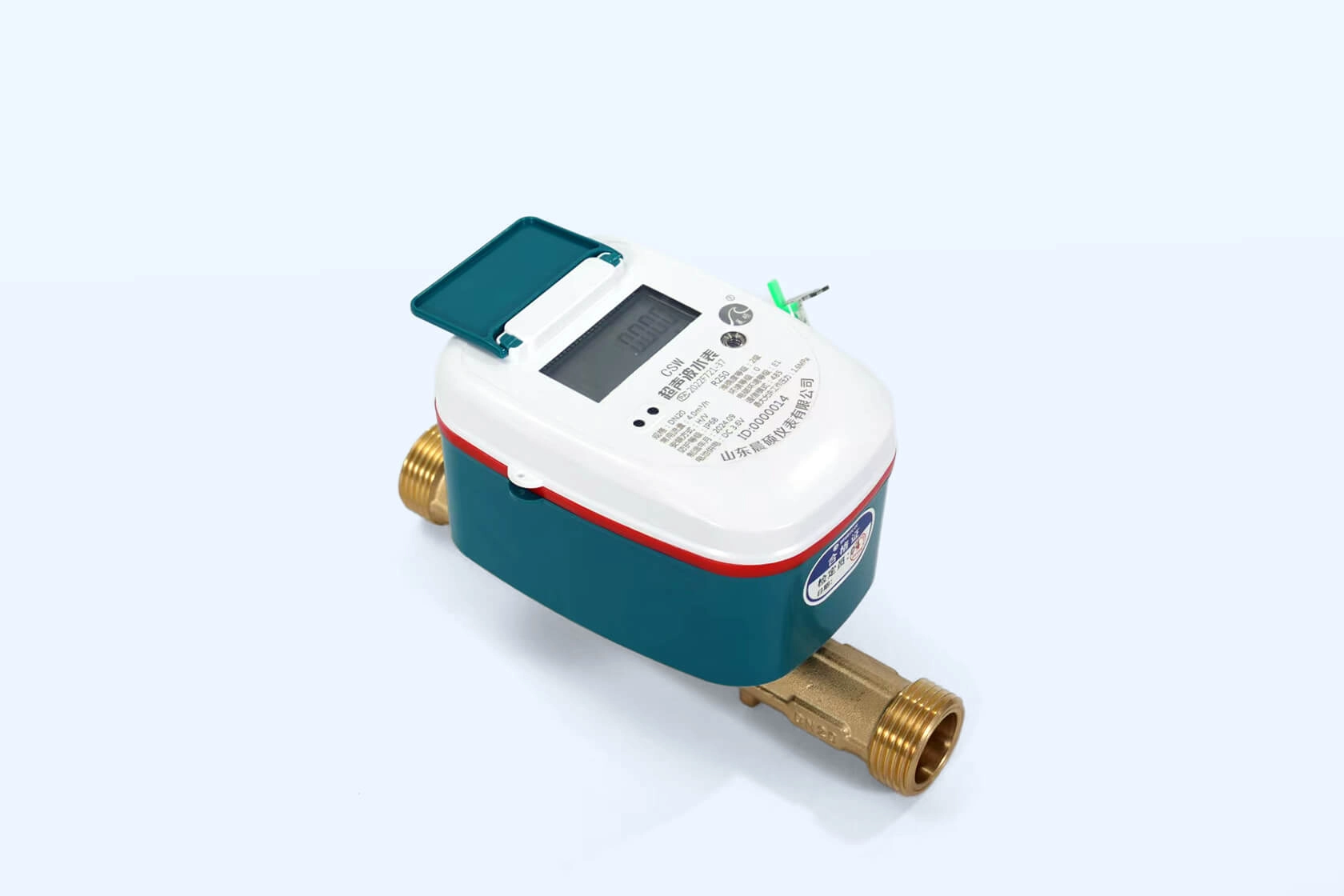
| Ultrasonic | R400 and above | 10 L/h and lower | 3–4× | Leakage targets, prepaid disputes, remote reading built in |
The payback arithmetic is worth doing honestly. If a household uses 100 m³ a year and 6% of that passes unmeasured under Q1, around 6 m³ is unbilled — perhaps US$6 to US$18 depending on tariff. Against a unit price premium of US$20, recovery takes about two years, before counting any saving from dispatching a reader. Where water is cheap and consumption is high, it takes longer; where water is expensive or truly scarce, it happens sooner. Do that sum with your own tariff and flow profile — it is the only number that should decide the question.
When the wider range pays for itself
- Any project aimed at reducing non-revenue water. The flow you need to see is precisely the flow below Q1 on a standard mechanical meter.
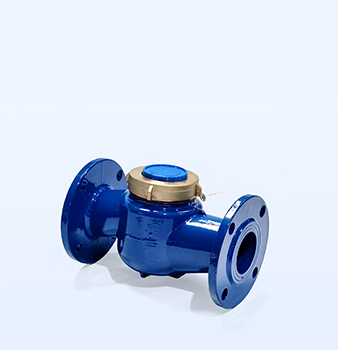
- District metered areas and night-flow analysis. Minimum night flow is a small number by definition. See how this drives the choice between ultrasonic and Woltman bulk meters on DMA boundaries.
- Prepaid installations. Customers dispute credit that drains from a leak the meter never registered. A low Q1 removes an argument before it starts.
- Intermittent supply. Cisterns refill slowly when pressure returns, and that water is real consumption.
When you are buying capacity you will never use
A wide range is not free accuracy — it is accuracy at the bottom of the curve, bought at the top of the price. Say no when:
- Flow is steady day and night — industrial supply, process water, cooling make-up. Nothing happens near Q1.
- Irrigation mains with high continuous flow and sediment. Pay for grit tolerance and pressure loss instead.
- Minimum night flow already sits comfortably above Q1 across the whole population — which you only know if you have logged the flow.
Reading a datasheet without being misled
- Ask for Q1 in litres per hour. An R number means nothing without the Q3 it is measured against.
- Check which diameter the headline R refers to. It is common to quote the best figure achieved at one size.
- Request the error curve, not just the class. Two class 2 meters can behave very differently across the same profile.
- Confirm temperature class (T30, T50, T70) against real water temperature. Accuracy limits loosen above 30 °C.
- Check pressure class (MAP) and head loss (ΔP). A meter that meets the specification but drops half a bar at peak flow is a different problem.
- Ask whether the class holds after the stated service life. Wear moves the curve; ultrasonic has no moving parts to wear, which is the honest reason it holds its figure longer.
Approvals: when class 1 stops being optional
In the EU, cold water meters fall under the Measuring Instruments Directive (2014/32/EU, Annex MI-001) and carry notified-body type approval. Which accuracy class is accepted depends on Q3 and on each member state’s implementation, so check the destination market rather than assuming. Outside Europe, national type approvals and utility-approved lists are what matter, and many of them specify error limits at installation and after a period in service. The practical consequence is simple: class choice often stops being commercial the moment a tender document names a requirement.
Frequently asked questions
Is class 1 always better than class 2?
Technically it is a tighter error band, yes. It costs more and it is often simply not required. Unless your regulator, tender or utility approval list demands it, class 2 remains the sensible default and the money is usually better spent on turndown range.
Does a higher R value mean a more accurate meter?
No. It means the meter stays inside its declared error limits down to a lower flow. Above Q2 both meters may measure identically; below Q2 the difference appears as measurable water versus unmeasured water.
Why does my meter appear to under-register at night?
Because flow below Q1 is outside the measuring range. Bulk meters sized by pipe rather than by flow hit this constantly on DMA boundaries — see our guide to what each DN range is actually for.
Do ultrasonic meters need recalibration less often?
They hold their accuracy longer because there is no rotor or gear train to wear. Verification intervals are still set by your regulation, not by the technology, but the practical drift between intervals is usually smaller.
Can I specify both a high R and low head loss?
Yes, and ultrasonic meters are the usual way to get it, since there is no obstruction in the bore. Check the ΔP figure at Q3 rather than taking “full bore” as a promise.
What to send us
- Pipe size and required Q3, plus minimum and maximum flow — measured if you have logged it.
- The Q1 you need to register, in litres per hour if you have already derived it.
- Water temperature range and working pressure.
- The approval the meter must carry, and the market it is going to.
- Whether you need pulse output or a communication module built in.
We supply both mechanical and ultrasonic bodies across DN15 to DN300, so we can quote the same duty against two technologies and let you compare like for like. Our ultrasonic CSW series covers the high-range case; DN15–DN65 mechanical meters are supplied alongside it. See the full range and what we can quote, then send us your specification.