
STS Prepaid Water Meters with LoRaWAN: Verifying Two-Way Key Management and Battery Budgets
A Standard Transfer Specification (STS) prepaid LoRaWAN water meter operates on distinct operational constraints. If overseas buyers are planning to procure STS prepaid water meters supporting LoRaWAN communication, verifying only whether they support wireless recharge and battery lifespan is insufficient. Three critical questions must be cross-checked:
- Can recharge tokens be delivered and executed reliably? Successful wireless data transmission does not mean the Token has been successfully credited.
- Can the battery sustain practical operational demands? Wireless communication frequency and valve actuation cycles directly impact battery longevity.
- Does the product truly support standard LoRaWAN protocols? Being labeled as a LoRa wireless water meter does not guarantee standard LoRaWAN network compatibility or successful STS system integration.
Deploying this combination in utility networks requires careful auditing of network scheduling, battery consumption, and the distinction between transport-level confirmations and application-level execution. You can explore relevant configurations via Chenshuo's wireless meter range.
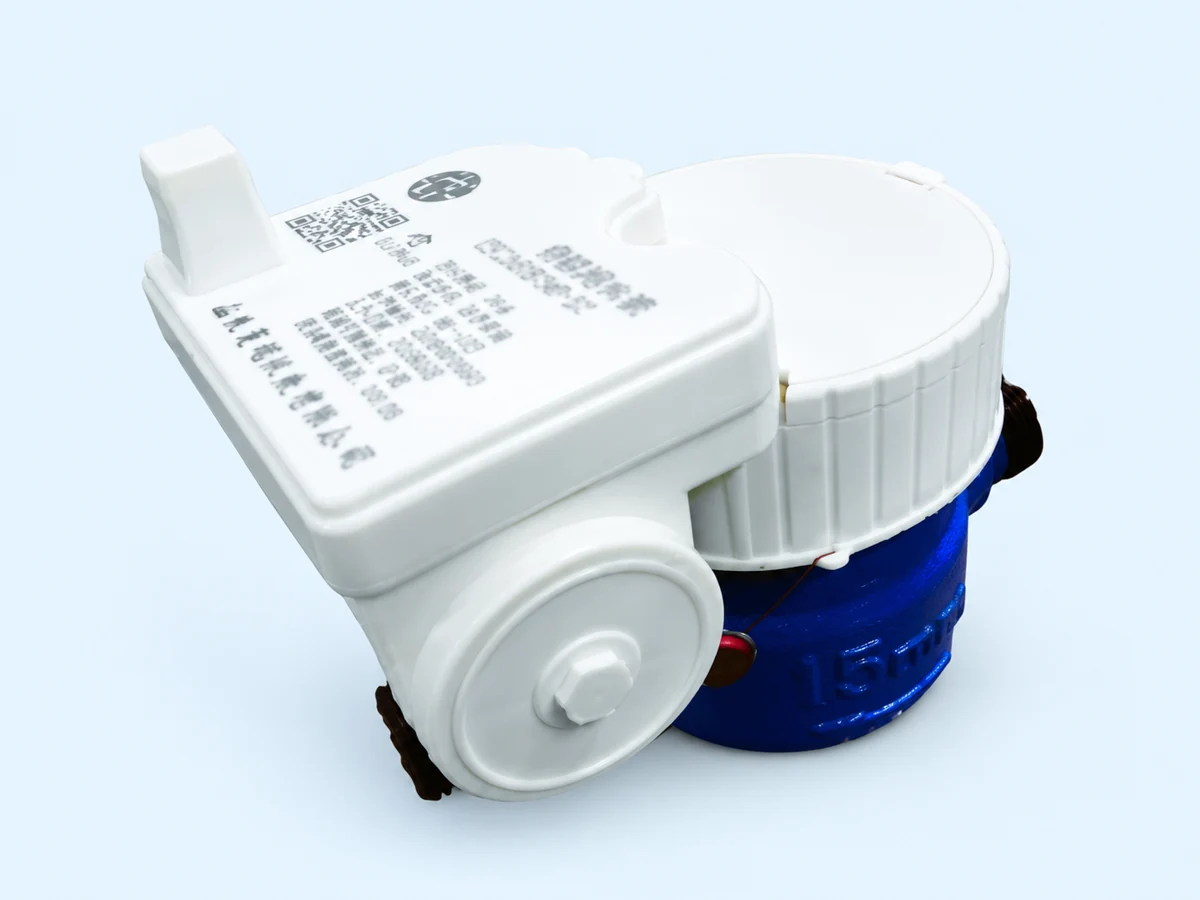
How Token Transmission Interacts with LoRaWAN Downlink Scheduling
STS prepaid functionality relies on transmitting numeric tokens to credit the meter or update configuration. When moving token transmission to a wireless network server, the communication path must accommodate LoRaWAN device classes and scheduling rules:
- Class A Downlink Latency: Battery-powered meters typically operate on Class A to conserve power. In Class A, the meter opens receive windows following an uplink transmission. A remote token transfer sent from the vending system is queued by the network server until the meter's next scheduled uplink or check-in interval.
- Class C Power Considerations: Class C devices listen continuously for downlinks, allowing rapid remote control, but continuous receiver operation draws significantly more power. The viability of Class C configurations requires verification against specific power availability or solar harvesting provisions.
- Message Delivery vs. Application Execution: LoRaWAN confirmed downlinks only verify that the radio packet reached the endpoint. Utilities must evaluate whether the specific meter model distinguishes radio receipt from successful application-level token decoding, valve execution, and returning a confirmed status code to the vending platform.
Battery Consumption Auditing: Valve Actuation Cycles vs. Uplink Reporting Intervals
Battery life estimates provided by vendors must be reviewed against specific operating assumptions, including baseline sleep currents, scheduled RF transmissions, and mechanical energy requirements for internal motorized valves under operating pressure.
Motorized valves require peak current during initial torque build-up. Operating conditions such as high mineral content, particulate buildup, or temperature variations can affect mechanical friction and overall current consumption. Passive self-discharge of lithium cells also varies under continuous temperature shifts. A thorough battery budget requires calculating total energy consumption based on realistic torque profiles, expected operating cycles, and vendor-specified quiescent currents.
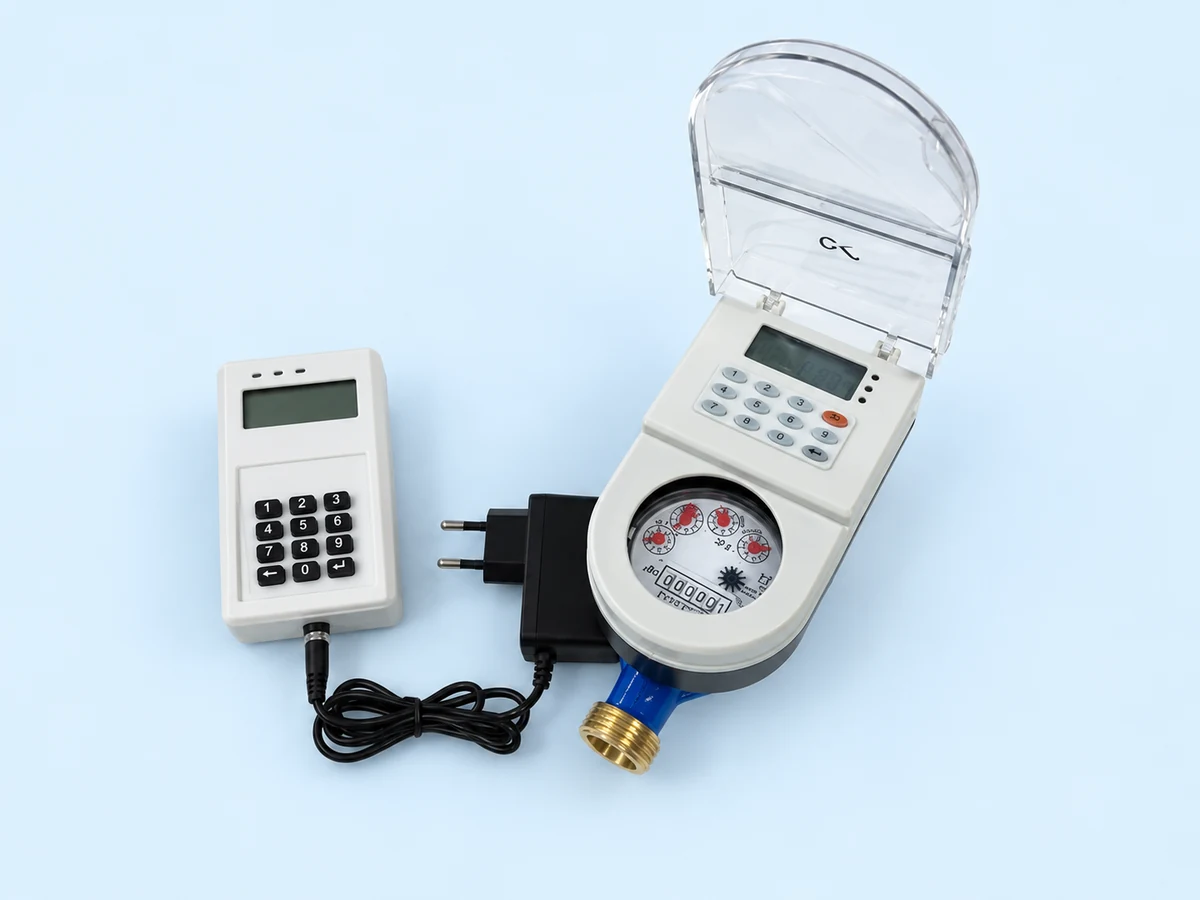
Distinguishing Native LoRaWAN Modules from External Add-on Connections
Prepaid automated meters in project procurement generally follow modular configuration options:
- Integrated Architecture: The metrology sensor, microcontroller unit, motor drive, and LoRaWAN transceiver share a unified system design or primary board layout.
- External Connection Architecture: A conventional mechanical or pulse-emitting meter is coupled to an external communication unit via a pulse cable or inductive pick-up. Buyers must verify whether the external unit provides a genuine channel for token input and valve control, as simple pulse counting alone does not support dual-way STS integration.
Buyers evaluating suppliers must review available technical documentation to verify module definitions. Many product lines classify devices under general wireless branding; utilities must differentiate between point-to-point proprietary modulations and certified, interoperable LoRaWAN stacks capable of joining public or private network servers. Note that general LoRa pages serve as wireless product entry points, and specific LoRaWAN compatibility, protocol versions, and STS integration for exact product models must be confirmed directly with the manufacturer.
Pre-Tender Evidence Checklist for Prepaid STS Wireless Modules
Before finalizing technical specifications for two-way prepaid projects, request the following documentation and verification items from vendors:
- STS Association Certification: Formal certificate confirming compliance with relevant standards for token decoding for the specific model code offered.
- LoRaWAN Protocol Compliance: Explicit documentation stating the supported regional frequency band, LoRaWAN MAC version, and conformity certificates for the designated model.
- Class A Interaction Sequence Diagram: Engineering documentation explaining the exact token transfer sequence, credit queueing on the LNS, local wake-up protocol, and downlink retry thresholds.
- Energy Budget Calculations: Comprehensive energy budget accounting for quiescent sleep current, TX/RX cycles, and expected valve exercising runs in target operating environments.
- Valve Drive Verification: Documentation or test records confirming that valve activation under expected load does not compromise metrology accuracy or cause control disruptions.